
Advanced Dental Technology in Orlando, FL
Advanced Dental Technology Near You
Dental technology is most useful when it gives us information that changes how we examine, diagnose, or plan care. At Millenia Dental Health, we use advanced dental technology in Orlando, FL, to help us evaluate teeth, bone, roots, and surrounding structures with greater detail while keeping records organized and accessible.
Having access to advanced dental technology near you can also make it easier to complete necessary imaging and treatment planning at our Conroy Road office. We welcome children, adults, and families from central Orlando, the Millenia Mall area, communities near Universal Studios Florida, and surrounding neighbourhoods.
What Is Advanced Dental Technology?
Advanced dental technology refers to digital tools used to collect, review, and organize information about oral health. These technologies support clinical examinations by showing structures that cannot always be evaluated thoroughly by looking inside the mouth alone.
Digital dental X-rays create images of the teeth and supporting structures without traditional film. CBCT, or cone beam computed tomography, produces three-dimensional images that can provide additional information about the jaws, bone, teeth, roots, and nearby anatomy when that level of detail is clinically appropriate.
Digital charts also allow dental findings, images, treatment information, and previous records to be organized in one electronic system. Technology supports diagnosis and planning, but it does not replace a clinical examination or professional judgment.
When you visit our dentist in Orlando, FL, we determine which records or images are actually necessary based on your symptoms, oral health, previous records, and the type of treatment being considered.
What Services Are Included in Advanced Dental Technology?
The technology used at our clinic may include:
Digital Dental X-Rays
Digital radiographs help us examine areas between teeth, around roots, and within the supporting bone that may not be visible during a routine visual examination.
CBCT 3D Imaging
Cone beam imaging may be recommended when three-dimensional information is useful for evaluating anatomy, bone, tooth position, or certain treatment needs.
Digital Charts and Records
Electronic records allow us to organize clinical findings, imaging, treatment plans, and previous care so that relevant information can be reviewed efficiently.
Not every visit requires every type of imaging. We select technology according to the clinical question we need to answer.
When Might Advanced Dental Technology Be Helpful?
We may use digital imaging or other technology when:
A toothache or other symptom requires a closer evaluation.
Decay may be present between teeth or beneath an existing restoration.
The condition of the bone around the teeth needs to be assessed.
Root shape or position needs further evaluation.
Dental implant treatment is being considered.
An extraction or other surgical procedure requires additional planning.
Orthodontic treatment involves tooth, root, or jaw relationships that need closer review.
Previous images are outdated or do not provide the information needed for current care.
What Are the Benefits of Advanced Dental Technology?
The value of dental technology depends on how appropriately it is used. Potential benefits include:
Seeing Hidden Structures
Digital imaging can reveal areas of teeth, roots, and bone that cannot be examined directly.
Improving Treatment Planning
Detailed records can help us plan restorative, implant, orthodontic, or surgical care more precisely.
Reviewing Images Efficiently
Digital images can be enlarged or adjusted on a screen so specific areas can be examined more closely.
Maintaining Organized Records
Digital charts keep diagnostic information, previous findings, and treatment history together for future comparison.
Using 3D Imaging Selectively
CBCT can provide additional anatomical detail when a two-dimensional image does not answer the clinical question.
Supporting Preventive Care
Comparing records over time may help us recognize changes that deserve attention during future examinations.
If you are looking for a trusted dentist near you who uses advanced dental technology in Orlando, FL, we can determine which tools are useful for your individual needs rather than taking unnecessary images simply because the technology is available.
How Do We Use Advanced Dental Technology?
When we use advanced dental technology in Orlando, FL, we usually follow these steps:
Reviewing Your History
We ask about symptoms, previous treatment, medical considerations, and any recent dental imaging that may already be available.
Examining Your Mouth
We perform a clinical examination first so we understand which areas require closer attention.
Selecting Appropriate Imaging
We choose digital X-rays, CBCT imaging, or other records only when they can provide information relevant to your care.
Capturing the Records
The required images or information are collected and entered into your digital chart.
Reviewing the Findings
We examine the records alongside what we found during your clinical examination.
Explaining the Results
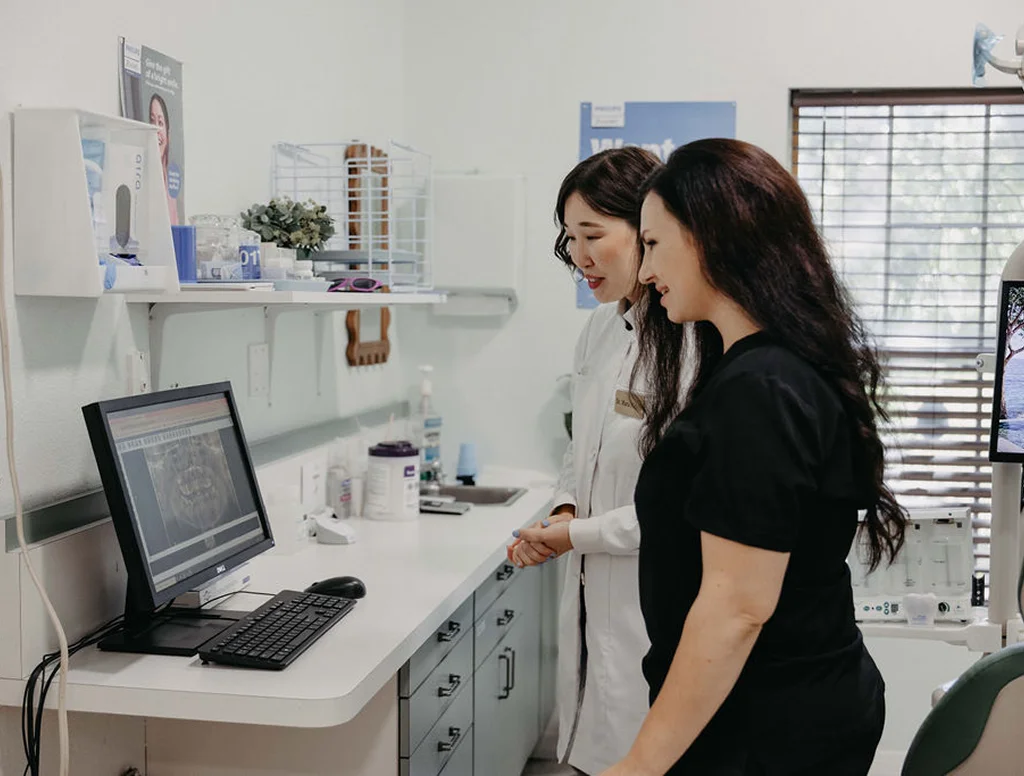
We show you relevant findings, answer questions, and discuss treatment options if care is recommended.
How to Prepare for Digital Imaging
Most digital dental imaging requires little preparation. Before your visit:
Tell us if you are pregnant or think you may be pregnant.
Bring information about recent dental X-rays if they were taken elsewhere and are available to you.
Let us know about previous dental treatment, implants, or other concerns that may affect imaging.
Remove your jewellery or accessories if our team asks you to before certain images.
Tell us if you have difficulty standing, remaining still, or positioning your head comfortably.
We will explain what is needed before taking any records.
Why Choose Millenia Dental Health for Advanced Dental Technology?
At Millenia Dental Health, we use advanced dental technology near you so you can access appropriate imaging and treatment planning conveniently close to home. We also consider whether each technology is actually necessary for the care being provided. When you visit us, you can expect:
Fully Digital Records
We use digital charts and digital X-rays to keep clinical information organized and accessible.
CBCT When Appropriate
We offer three-dimensional imaging when additional anatomical detail can meaningfully support diagnosis or treatment planning.
A Comfort-Focused Visit
Our comfort menu can help make your time in the office more relaxed.
Personalized, Conservative Care
We recommend treatment according to your findings and needs rather than taking an overtreatment approach.
Communication in Three Languages
Our team can assist patients in English, Russian, and Spanish.
Flexible Financial Options
We work with insurance coverage and offer Cherry Payment Plans for eligible treatment.
Schedule a Technology-Supported Dental Evaluation
Good technology should help answer specific clinical questions, not make treatment more complicated. At Millenia Dental Health, we combine digital records and appropriate imaging with a careful examination so we can understand what is happening before recommending care.
To learn more about our general dentistry near you, call us at (407) 246-0104, email us at [email protected], or visit us at 5301 Conroy Rd, Ste 100, Orlando, FL 32811, United States to book your consultation.
FAQs
Are digital dental X-rays safe?
Digital dental X-rays use ionizing radiation, so we take them only when the expected diagnostic benefit justifies the exposure. The amount and type of imaging needed depend on factors such as your age, oral health, symptoms, treatment history, and previous records.
Will I need a CBCT scan at every dental appointment?
No. CBCT imaging is not a routine requirement for every visit. It is generally reserved for situations where three-dimensional information can provide clinically useful details that standard examination or two-dimensional imaging cannot provide adequately.
Can children have digital dental X-rays?
Yes, when clinically necessary. The type and frequency of imaging for a child depend on factors such as dental development, cavity risk, symptoms, previous treatment, and the information needed for diagnosis or monitoring.
Can digital imaging detect every dental problem?
No. Imaging is only one part of a dental evaluation. Some conditions are identified mainly through a clinical examination, symptoms, periodontal measurements, testing, or other findings. We interpret imaging together with the rest of the examination.
Can my previous dental X-rays be useful at a new visit?
Possibly. Recent images may provide useful information and, in some situations, may reduce the need to repeat certain records. Whether new imaging is needed depends on the quality, age, and relevance of the existing images and your current oral health.
Does dental technology make treatment more accurate?
Technology can provide additional information that supports diagnosis and treatment planning, but no device guarantees a particular outcome. The usefulness of any technology depends on selecting the appropriate tool, interpreting the findings correctly, and combining them with a thorough clinical examination.